Primary Maths Through Hands and Feet
Term 3 online course
This course aims to equip teachers with visible and tactile methods for the development of primary maths. As an example of the classroom teaching method, the teacher guides the children through phases of visible picture-making to memory and mental picture to concept. This addresses the need of all children to inwardly picture number-relationships, and especially the needs of those who struggle to do this. An understanding of this approach enables teachers to create their own techniques.
The insight and pedagogical advice of Rudolf Steiner informs the course. This includes his descriptions of how the lower senses–of life, movement and balance–are at work in a child’s computation and understanding of arithmetic. The tutor will include important indications on what, in the developing child, the arithmetic arises from. The course also covers examples of classroom teaching method.
The weekly online sessions will largely consist of demonstrations of age-appropriate practical teaching methods, together with Rudolf Steiner’s indications that inform them. There is exercise material to practice these methods during the sessions and afterwards. Between the activities insights will be given so that all is woven into a fabric of understanding.
This approach through the senses leads ultimately to the goals and learning outcomes that belong to each age group. It is an approach which lives ‘in the forces of the limbs that stream inward from the world-periphery so that the head awakens’. This outside-in path is, after all, the way of Waldorf education and that is the way of child development. So often in life the mathematical activity of children and adults consists of routines followed blindly. How much richer is the human being who understands his or her arithmetising because it is inwardly seen.
Week 1 – Class 1
Introduction. A day with the sheep…a story of life on the farm, containing deeds of plus, minus, times and divide. The ‘concept of Together’…Rudolf Steiner’s indication on where to begin, so that the children understand arithmetic. Counting, the ground under arithmetic. The strata of mathematics that build upon this ground.
Week 2 – Class 2
The change from Roman to Arabic numerals. We bought 24 scones but now that we’re home there are only 17 in the basket. How many have we lost? 24-? = 17. Creating, saying and writing arithmetic tasks as real-life actions, rather than end-results…and why the children need this.
Week 3 – Class 3
At this age, number becomes measure. How many becomes how long, how far, how big? Activities with the Cuisenaire Rods using length (+/-), area (x/÷), volume. The Number Street, also as a wall chart. The Decade Rope and Step Stride Jump, done with the feet.
Week 4 – Class 4 & 5
A beginning with fractions using large circular patterns with wooden rods on the floor, hence using the feet. Transferring these patterns onto the board and onto paper. A graded sequence of fraction-tasks, visual-spatial. The quick routines for handling fractions, taken as far as the adding and subtracting of mixed numbers…gymnastics.
Week 5 – Class 5
Finding the factors of a number…getting to know the personalities of the numbers…and hence improving the x tables. The four different kinds of number (as in ancient Greece) and the making of a chart to show them. Prime factors, highest common factor (HCF) and lowest common multiple (LCM). A geometrical construction telling of the ancient Greek conception of a product.
Week 6 – Class 6
Decimal numbers using wooden rods, ie tenths and hundredths. From musical interval…to ratio…to fraction…to decimal. From fraction to decimal to percentage…and back. Money and its circulatory life: purchase, loan and gift. The value of work. Interest, compound and simple. Discerning between Sum, Difference, Product and Quotient – a mystery solving game.
Week 7 – Insights
Rudolf Steiner’s picture of arithmetic’s basis in the lower senses and his picture of the basis of the lower senses.
Practical Information
Term 3, 2026: 16 July to 27 August.
7.00pm – 9.00pm
All sessions will be recorded and recordings made available until the end of the term.
Gordon Woolard
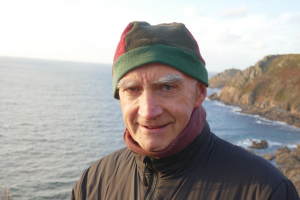
Gordon has been a valued tutor with the Seminar, offering courses in Projective Geometry, Early Childhood, and Sensory Integration. His training includes university Physics, the Foundation and Education years at Emerson College, the Wynstones Science Teachers’ course, the Michael Hall Kindergarten training, Joinery and Cabinet Making, a post graduate teaching diploma for SpLD (Dyslexia) and Audrey McAllen’s Extra Lesson training.
On a quest for the roots of arithmetic, he tries to unravel the lower senses’ developments of early childhood – as Rudolf Steiner indicated – and its application to the understanding of maths. Added to this is his experience as teacher, educator and Extra Lesson practitioner for children of all ages.
He applies the Extra Lesson methods to help children who struggle with literacy, numeracy, the school environment and the spatial world. He seeks to throw light on this work out of Rudolf Steiner’s insights on the senses.
For the past twenty years in Europe and Asia Gordon has given training to teachers working in Waldorf and in mainstream education – inspired by anthroposophy – and brings workshops that link the kindred themes of projective geometry, the Philosophy of Freedom and the observation of plants.
$480 for the term.
- If you withdraw prior to a course beginning we will refund any fees paid, less a $100 administration fee.
- If you withdraw after the first session of the course, we regret we cannot refund fees paid.
- Please email office@steinerseminar.edu.au if you intend to withdraw.
Certificate of Professional Development
Each session is live streamed and recorded. Participants will receive a Certificate of Professional Development upon completion, subject to 100% attendance (live participation or catching up on recordings).
This course does not lead to a qualification.
